

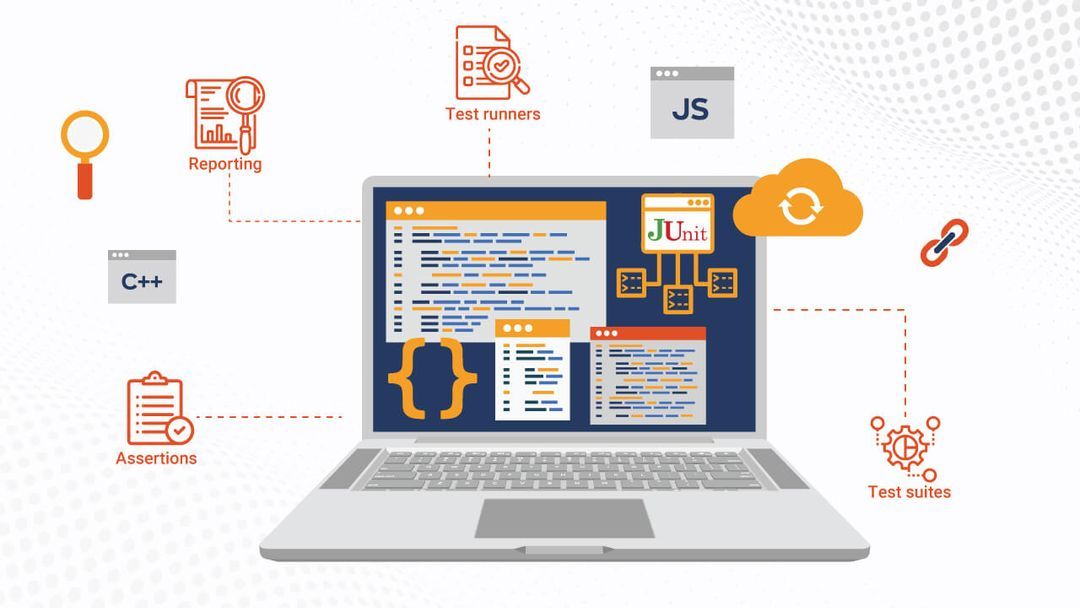
In software development, JUnit testing plays a vital role in creating reliable and maintainable Java applications. It helps detect bugs early, improves code efficiency, and reduces regressions during future updates. By using JUnit’s annotations, structure, and lifecycle management, developers can write clean, consistent, and easily maintainable tests that verify application behavior precisely.
Structuring Java Tests for Readability and Clarity
Organized test code acts as living documentation and simplifies maintenance. Properly structured tests improve readability and reduce debugging time.
Mirroring production package structure in test directory
Following Maven and Gradle recommendations, tests should be placed in src/test/java and production code in src/main/java. Test directories should mirror the production package hierarchy.
Benefits include:
- Consistent organization across the codebase
- Easier navigation during debugging
- Access to package-protected methods
- Separation of concerns between production and test code
Naming conventions: given_when_then format
Adopting the Given-When-Then (GWT) naming convention improves clarity.
@Test
public void givenValidCredentials_whenUserLogsIn_thenAccessGranted() {
// Given
User user = new User(“username”, “validPassword”);
// When
boolean result = authService.login(user);
// Then
assertTrue(result);}
This format makes tests self-documenting and easier to understand.
Keeping one assertion per test method
Each test should verify one specific behavior. Benefits of this approach:
- Failures are transparent and diagnosable
- Test names remain precise
- Code is concise and readable
Multiple assertions may be used when verifying related aspects of the same outcome.
Managing Test Lifecycle with JUnit 5 Annotations
Lifecycle annotations in junit testing ensure controlled test execution and clean environments.
Using @BeforeEach for fresh object initialization
@BeforeEach
void initializeTestObjects() {
calculator = new Calculator();
dataService = new DataService();}
- Runs before each test
- Provides clean state
- Prevents contamination between tests
Cleaning up with @AfterEach
@AfterEach
void tearDown() {
calculator = null;
dataService.closeConnections();}
- Releases resources
- Resets environments
- Prevents flaky tests
When to use @BeforeAll and @AfterAll
@BeforeAll
static void initializeExpensiveResources() {
databaseConnection = DatabaseFactory.createConnection();}
@AfterAll
static void releaseExpensiveResources() {
databaseConnection.close();}
- Used for database connections, servers, or large datasets
- Runs once per test class
- Can use @TestInstance(PER_CLASS) to avoid static methods
Mocking External Dependencies for Isolation
Mocking helps isolate unit tests from external systems.
Guidelines:
- Mock external dependencies (databases, services), not value objects
- Prefer real implementations or fakes when practical
- Avoid tight coupling to implementation details
- Balance unit tests with integration tests
While mocks provide isolation, integration with Selenium WebDriver or chatgpt test automation ensures end-to-end validation in real environments.
Improving Test Coverage with Parameterized Tests
Parameterized tests reduce duplication and improve coverage.
Advantages:
- Higher readability
- Simplified maintenance
- Broader scenario coverage
- Grouped related cases
This improves test efficiency while maintaining thorough coverage.
Scaling Tests with Cloud-Based Platforms
While junit testing ensures maintainability and reliability at the code level, scaling execution across multiple environments can be challenging. Cloud-based platforms simplify this by providing instant access to real browsers, devices, and operating systems.
One such platform is LambdaTest, an GenAI-native test execution platform which allows you to run JUnit tests across 3000+ environments with features like parallel execution, CI/CD integrations, and advanced debugging tools. This approach reduces infrastructure overhead and accelerates feedback cycles, making your test automation pipeline more efficient.
Conclusion
JUnit testing provides a structured and reliable foundation for Java test automation. Applying clean structuring, naming conventions, lifecycle annotations, and proper mocking leads to maintainable and effective test suites.
Combining junit testing with Selenium WebDriver, LambdaTest, and chatgpt test automation creates scalable testing pipelines that deliver faster feedback and higher reliability. Parameterized testing further enhances coverage with minimal duplication, strengthening quality at every stage.
By following these practices, developers ensure stable applications, lower defect rates, and smoother maintenance cycles.
