

A New Kind of Spectacle
In the age of streaming platforms, TikTok virality, and Instagram aesthetics, Hybrid Collapse enters the cultural stage as something between a music video series, a fashion show, and a digital art installation. It thrives on spectacle — cinematic loops, AI-generated visuals, and posthuman styling — yet it never feels like a simple trend. Instead, Hybrid Collapse crafts an immersive world where fashion and entertainment blend into one seamless experience.
Each release operates like a micro-event: a new track drops with an accompanying video, a storm of visual teasers floods social media, and fragments circulate across platforms as stories, shorts, and reels. Viewers encounter it the way they consume modern entertainment — not as long-form narratives but as addictive streams of high-impact moments designed to be replayed, remixed, and shared.
Fashion as Performance, Not Just Clothing
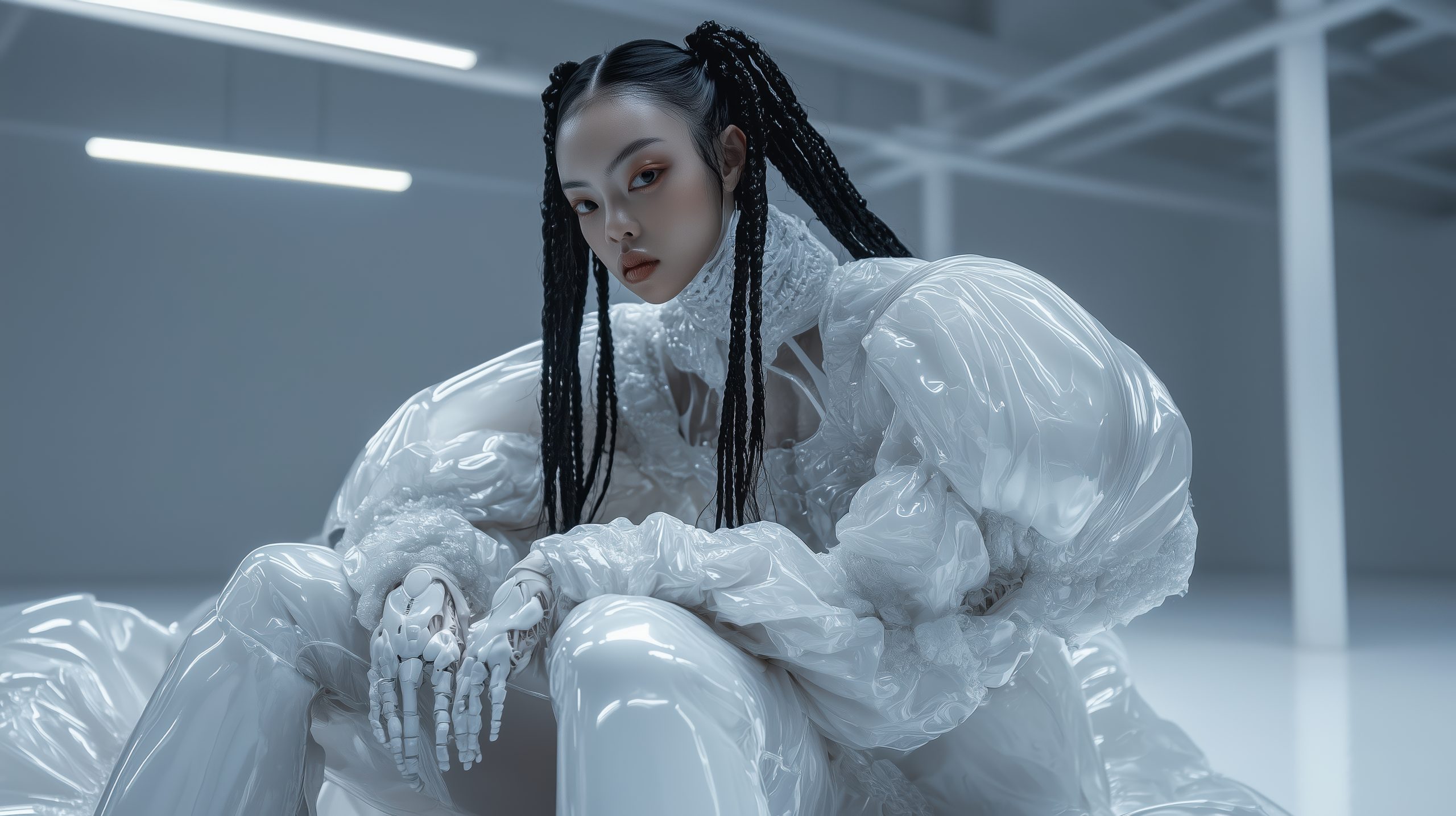
The fashion dimension of Hybrid Collapse is impossible to ignore. Latex silhouettes, mirrored masks, ceremonial gestures, and cybernetic accessories transform models into characters in a futuristic drama. The styling evokes luxury runways and underground subcultures at once, merging references from haute couture, fetish aesthetics, and science-fiction minimalism.
But here’s the twist: fashion in Hybrid Collapse does not sell products; it sells atmosphere. The garments feel like artifacts from an alternate timeline, part costume, part interface, part symbolic armor. This gives the project a theatrical quality missing from many contemporary shows — fashion as pure performance art, closer to music videos by Björk or FKA Twigs than to conventional campaigns.
Entertainment in the Algorithmic Era
Where traditional fashion films once relied on cinematic pacing, Hybrid Collapse embraces the language of digital entertainment: rapid editing, visual effects, endless loops optimized for social platforms. The project understands that today’s cultural currency lies in memorable fragments — the 10-second clip that travels faster than any full-length feature.
Every release contains moments designed for virality: a single striking pose under red lasers, a slow-motion ritual with AI-sculpted masks, a glitch transition between human and synthetic faces. These fragments thrive on TikTok, Instagram Reels, and YouTube Shorts, where attention spans are short but repetition is infinite.
At the same time, longer cuts and full music videos reward viewers who want depth beyond the scroll, offering a layered audiovisual world where fashion, music, and performance intertwine.
Music Videos as Fashion Runways
Hybrid Collapse reinvents the music video format as a hybrid runway-performance space. Tracks unfold alongside choreographed movements, costume reveals, and cinematic set pieces, blurring the line between concerts, exhibitions, and digital catwalks.
This approach recalls the golden era of MTV while adapting to the logic of algorithmic platforms. The visual language borrows equally from luxury advertising, avant-garde cinema, and influencer aesthetics, creating content that feels both high art and mass entertainment.
The result is a new entertainment model: part music release, part fashion editorial, part social media phenomenon.
The Celebrity Logic Without Celebrities
Curiously, Hybrid Collapse operates without conventional celebrity culture. There are no recognizable influencers or pop stars dominating the screen. Instead, the aesthetic itself becomes the star.
AI-generated faces, anonymous performers, and digital avatars replace familiar icons, suggesting a future where style and atmosphere matter more than individual personalities. This aligns with emerging trends in entertainment, where audiences follow moods, aesthetics, and algorithms as much as — or more than — specific people.
Conclusion: Fashiontainment for the Posthuman Age
At its core, Hybrid Collapse shows how fashion and entertainment can merge into a single algorithm-ready format. It delivers cinematic style for luxury audiences, short-form spectacle for viral platforms, and philosophical undertones for those seeking depth beneath the surface.
This is fashiontainment for the posthuman era: glamorous, immersive, infinitely shareable — a cultural hybrid born from music videos, digital fashion, and the algorithmic attention economy shaping 21st-century aesthetics.
